Broken Fan Blade Sucked Ryanair Passenger's Head Through Window
Two clean inspections, four bird strikes, and a warning nobody could stop in time.

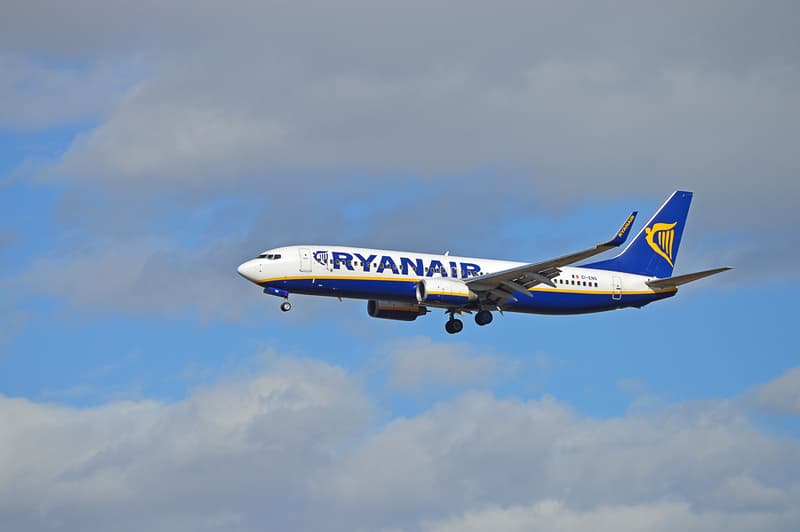
Ljubisa Karovic was buckled into seat 11F on a Ryanair jet leaving Greece when a chunk of metal punched through the side of the plane right next to him. His head and shoulders got yanked out through the broken window. His wife and a flight attendant grabbed hold of him and pulled him back inside while the cabin roared with wind and lost pressure around them.
That happened on July 10, less than ten minutes after takeoff. The plane, a Boeing 737 headed to Memmingen, Germany, turned around and made an emergency landing back in Thessaloniki. On August 13, U.S. investigators finally spelled out what tore the window open, and the answer traces back to a single broken blade spinning inside the right engine.
Seven Minutes In, the Warnings Started
The trouble did not come out of nowhere. Seven and a half minutes after leaving the runway, the pilots got a cockpit warning for high engine vibrations. Nearly two minutes after that, according to the preliminary report, the shaking spiked hard and the crew heard a loud bang as the autopilot shut itself off.
The jet was climbing through about 16,000 feet in Greek airspace when the window blew out. Inside the cabin, oxygen masks dropped as the plane lost pressure. Videos shared afterward by a local Thessaloniki radio station showed passengers strapped in with masks over their faces and a man seated near the shattered window. Everyone knew something had gone very wrong.
The Man in Seat 11F
Karovic, 61, took the worst of it. His head and shoulders were partly outside the aircraft before he was dragged back in, and he came away with serious injuries. His wife told Reuters that she and a flight attendant were the ones who got him back through the opening. That is the kind of grip you do not think you have until you need it.
Once he was back inside, crew and passengers moved him to row 12, where a doctor who happened to be on board started tending to him. Others grabbed a metal box from the flight attendants and used it to try to plug the hole in the fuselage until the plane could get on the ground. When it landed, Karovic asked for medical help and got it. He was the only person who needed it, though the whole cabin lived through the same nine minutes of terror.
One Blade Broke, and Everything Followed
The engine at the center of this is a CFM International CFM56-7B26, the No. 2 engine mounted on the right side. Investigators found that a fan blade separated, meaning it snapped off while spinning at high speed. The report from federal investigators says fragments then shot out and slammed into the fuselage and the right horizontal stabilizer, the small wing at the back of the plane.
Some accounts point to multiple blades breaking, punching the aircraft in at least two spots. One of those hits landed exactly where Karovic was sitting. A fan blade is a heavy piece of metal, and when it comes apart at those speeds, it turns into a projectile the engine housing is supposed to contain. This time, pieces got out.
The Bird Problem Nobody Had Solved
When investigators pulled the engine apart, they found bird remains inside it. That points to a bird strike during takeoff, though the NTSB has not said flat out that birds caused the blade to let go. What makes this detail stick is the history: flight crews had reported four suspected bird strikes to that same right engine over the previous year, and bird remains turned up after two of those.
Birds hitting a jet engine are common. Most of the time the engine shrugs it off. But four suspected strikes on one engine in a year is a lot, and investigators are now looking at whether those earlier hits left damage that quietly built up over time. The report notes signs of metal fatigue in the fan blades, the kind of cracking that grows slowly until a part finally gives way.
Inspected Weeks Before It Failed
The part that will stick with a lot of flyers: those fan blades had been checked. Maintenance records show ultrasonic inspections in May 2026 and again in November 2025, and neither one turned up damage. The blades were last looked at less than three weeks before the window blew. On paper, the airline did what it was supposed to do.
Jeff Guzzetti, a former NTSB and FAA investigator who read the preliminary report, told the Associated Press the required maintenance appears to have been done on schedule. His follow-up is the real question mark. Investigators, he said, will dig into how those inspections were actually carried out and whether the earlier bird strikes planted damage that a scan missed. As Guzzetti put it, "We know what happened and even to some extent why it happened, but there's still unanswered questions."
The CEO Who Got a Public Scolding
Ryanair's outspoken chief executive, Michael O'Leary, managed to get himself into the story too. Last month he told investors the investigation was zeroing in on foreign object damage, meaning the birds, and not on the plane's age or its maintenance history. That is a convenient thing for an airline boss to say while an inquiry is still open.
The NTSB was not having it. The agency publicly reprimanded O'Leary, saying investigators had ruled nothing out and that he was not authorized to talk about the direction of the case. Ryanair had earlier described the whole thing in soft language, saying the flight "returned to Thessaloniki shortly after takeoff when a passenger window dislodged in-flight." A window that "dislodged" is a strange way to describe a man's head getting pulled outside a moving plane.
Why This Sounds Familiar
If a fan blade breaking and a passenger getting sucked toward a window rings a bell, it should. In 2018, a Southwest Airlines Boeing 737 lost a fan blade in flight. Debris broke a window, and a woman was partially pulled out. She died of blunt force trauma. It was a national story and it changed how these engines get watched.
After that 2018 accident, regulators put a rule in place requiring regular inspections of these exact fan blades. That rule is the reason Karovic's engine got scanned in the first place, twice, in the months before the failure. The comparison is hard to miss: same aircraft family, same engine type, same kind of blade coming apart, same window blowing out with a person right next to it. The difference this time is that Karovic survived.
The Plane and the Airline
The jet itself was 18 years old, a Boeing 737-8AS. It was operated by Malta Air, a subsidiary of Ryanair, which is the biggest budget carrier in Europe. An 18-year-old plane is not unusual in commercial flying; airlines keep aircraft in service for decades when they are maintained. Age alone does not condemn a jet, but O'Leary's push to keep age and maintenance out of the conversation is exactly why the NTSB stepped in.
There is one detail worth understanding about why a U.S. agency is running an investigation into a European flight over Greece. Under international aviation rules, Greece's Hellenic Air and Rail Safety Investigation Authority had the option to hand the case off, and it did, passing it to the NTSB because the engine and aircraft are American-built. Greece stays involved as an accredited participant.
What's Still Unanswered
A preliminary report is not the last word. It lays out the facts investigators are sure of and leaves the harder question hanging: what actually made that fan blade break loose. The bird remains, the four earlier suspected strikes, the metal fatigue, and the clean inspection results all sit in the file, and the NTSB has not stitched them into a single cause yet.
For now, the numbers tell the story plainly enough. One engine, four suspected bird strikes in a year, two clean scans, nine minutes of warnings, and one man in seat 11F who got pulled halfway out of an airplane and lived because two people refused to let go. A full investigation will decide whether this was a freak event or something that should have been caught before takeoff.
Most read
This week

World
Woman Leaps From 11th Floor Into Firefighter's Basket in Berlin Fire

Entertainment
Ruby McNally Celebrates 100th Birthday With Skydive Over Davis

Sports
Cristiano Ronaldo Says 2026-27 Season Is Probably His Last

Entertainment
Hayden Panettiere, Star of Heroes and Nashville, Dies at 36
Crime
Suspect in Virginia State Shooting Found Hiding in Dorm Closet