Trump White House Renovation Costs Top $900 Million, Records Show
One quiet government account explains how the bill got this big.

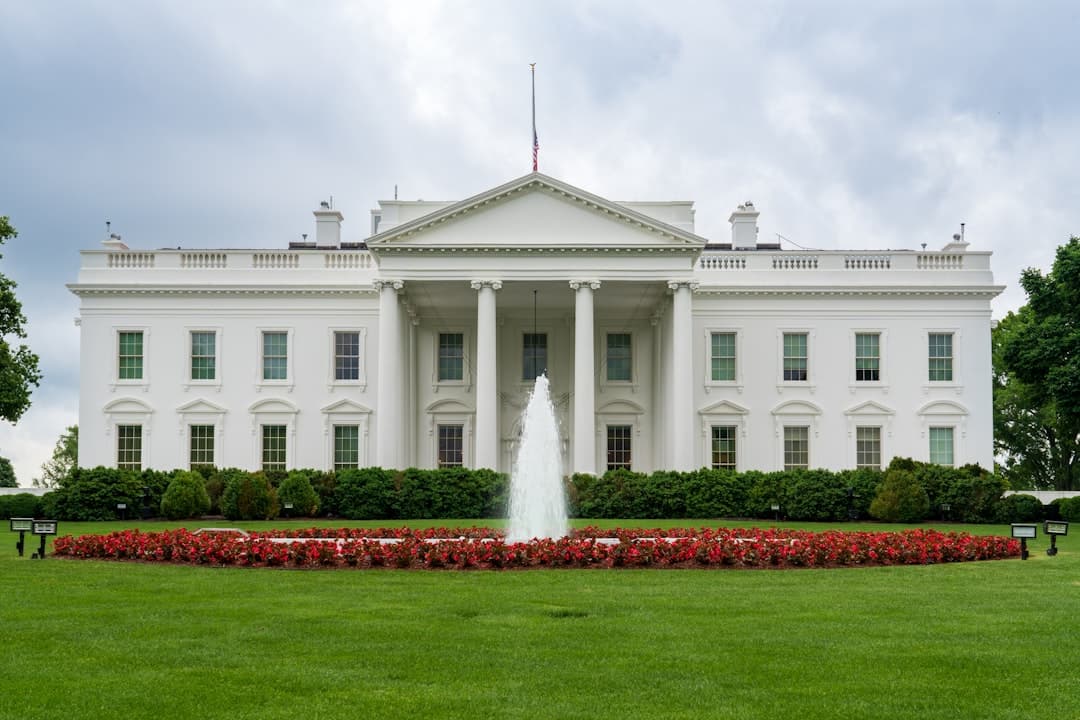
When Trump first pitched a fancy new ballroom for the White House, the price was $200 million, and the pitch came with a promise. Private donors would cover it, not you. That estimate has not aged well.
Records reviewed by The Washington Post now put the cost of Trump's White House construction spree at a minimum of $927 million, and officials would not rule out a higher final number. Most of it is coming from taxpayers. Almost none of it went through the normal channel for spending public money, which is Congress.
A Maintenance Fund That Suddenly Held $875 Million
There is an account inside the federal budget called White House Repair and Restoration. On a normal day it holds a few million dollars, the sort of money you spend fixing pipes, patching plaster, and keeping an old building standing. It is boring on purpose. Nobody watches it closely.
Since Trump took office, his administration has moved roughly $875 million into that quiet little fund, according to documents reviewed by reporters. The cash came from transfers out of the Secret Service, the White House Military Office, and other federal agencies, plus a pile of private donations. By the end of June, officials had already issued orders for more than $100 million of work to be paid straight out of that maintenance account. That is not routine upkeep. That is a construction budget wearing a disguise.
The $70 Million Nobody Will Explain
Buried in the paperwork is a single line that reads like a plot hole. Another $70 million was directed into the account, and the documents do not say where it came from. No agency listed. No donor named. Just a large sum arriving with no return address.
Pulling money out of the Secret Service to pay for cosmetic upgrades already raised eyebrows, since that is the agency tasked with keeping the president alive. But the unexplained $70 million is its own puzzle. When a government asks the public to cover nearly a billion dollars in construction, the least it can do is say who wrote the checks. So far the White House has not answered questions about the full source of the funding, or the total price, per the documents reviewed.
What All That Money Is Actually Buying
The centerpiece is the ballroom, a 90,000-square-foot hall built to seat 1,000 guests, priced around $600 million on its own. Getting there meant tearing down the historic East Wing, which crews bulldozed back in October 2025.
That is only the start of the shopping list. Jackie Kennedy's Rose Garden is being paved into a poolside patio styled after Mar-a-Lago. There is a new helipad, remodeled fountains in Lafayette Square, a fresh visitor screening building, and an underground security complex. The North Portico got wrapped in a tarp printed with a picture of the columns it was hiding. Add in gold embellishments, new statues, labor, and materials, and one reporter described the scope of the work as enough to make old monarchs jealous. Whatever your politics, that is a lot of gold leaf for a rental.
A Federal Court Told Him to Stop
On August 6, the U.S. Court of Appeals for the D.C. Circuit ordered the administration to halt work on the ballroom. In a 136-page, 2-1 ruling, the judges were blunt. "Whether or not a massive ballroom should be constructed is for Congress to decide and is not a matter for Executive self-help," they wrote. Safety and security portions of the structure could continue, but the party hall could not.
The fight started when the National Trust for Historic Preservation sued in December 2025, arguing the demolition and rebuild skipped a legally required review that includes sign-off from Congress. The court agreed and paused the project, giving the administration 14 days to run to a higher court.
The Fight Over Who Actually Owns the White House
The appeals court did not just talk about permits. It made a point about the building itself. "Each President is a temporary tenant, not the owner, of the White House and its Executive Residence," the judges wrote in their decision. The house belongs to every president who comes after and to the public, they said, and no single occupant gets to remodel it however he likes.
Judges Patricia Millett and Bradley Garcia put it even more plainly in the opinion: "Congress has exclusive authority to regulate the construction and demolition of White House structures." Justice Neomi Rao dissented, framing the case as aesthetic harm to a passerby weighed against the president's safety. Trump vowed to appeal, and the case is now teed up for the Supreme Court, which will weigh separation of powers and Congress's grip on federal spending.
How This Stacks Up Against the Last Big Renovation
Big White House projects are not new. The place is old, and old buildings eat money. What makes this one stand out is the method more than the muscle.
Look at the last major overhaul. In 2009, the Obama administration upgraded the electrical and structural bones of the East and West wings for about $376 million spread over several years. Congress appropriated that money in the open, and the General Services Administration managed the work. It was slow, public, and boring in the way government spending is supposed to be. The current effort runs the opposite way. It is more than twice the size, moving faster, funded by cash pulled sideways from other agencies, and it skipped the vote entirely.
What the White House Is Saying
The administration is not backing down or apologizing. Spokesman Davis Ingle told reporters the money is being spent in a manner consistent with what Congress originally intended, and framed the whole thing as overdue housekeeping. "President Trump continues to implement long-overdue and necessary renovations to beautify the People's House as we celebrate our great Nation's 250th anniversary of independence," he said.
In another statement he leaned into the branding, crediting the "Builder-in-Chief" for keeping the mansion "properly glorified" for generations to come. Trump has separately insisted the ballroom itself will be paid for by $400 million in private donations. The trouble with that math is that the total has already blown past $400 million, and the maintenance account swelled with agency transfers, not just gifts.
So here is where things stand. The demolition is done, the East Wing is gone, and a court has frozen the marquee project until either Congress signs off or the Supreme Court says it does not have to. The bill keeps climbing, the funding keeps arriving from strange places, and the paperwork describes an overhaul touching nearly every corner of the grounds, from the West Wing near the Oval Office to Lafayette Park. Whether you love the idea of a gilded ballroom or think it belongs at a casino, one detail is hard to wave off. A fund built to fix leaky pipes is now the biggest construction wallet in modern White House history, and hardly anyone got to vote on it.
Most read
This week

World
Woman Leaps From 11th Floor Into Firefighter's Basket in Berlin Fire

Entertainment
Ruby McNally Celebrates 100th Birthday With Skydive Over Davis

Sports
Cristiano Ronaldo Says 2026-27 Season Is Probably His Last

Entertainment
Hayden Panettiere, Star of Heroes and Nashville, Dies at 36
Crime
Suspect in Virginia State Shooting Found Hiding in Dorm Closet