Kentucky Man Dies in 177-Foot Fall at Oregon's Silver Falls
He crossed the barrier for one photo. The rock had other plans.

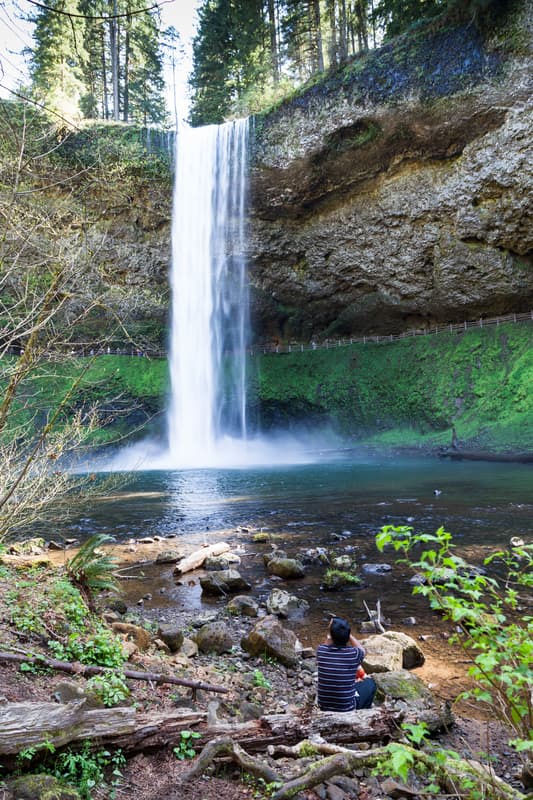
Zachary Nicholas Mertens was 20 years old and a long way from home when he climbed over a barrier at the top of a 177-foot waterfall in Oregon. He crossed the creek that feeds the falls, stepped into a closed area, and posed for photos. Around 6:30 p.m. on Monday, August 10, he slipped and dropped into the pool far below. Someone at the scene started CPR before crews arrived, but the young man from Burlington, Kentucky, died where he landed.
It happened at South Falls, one of the tallest and most photographed waterfall at Silver Falls State Park near Salem. Oregon State Police spent the next day piecing together what went wrong, and the story they told is short and awful. A barrier was there for a reason. He went past it anyway.
A barrier, a creek, and one wrong step
The detail that stands out in every police account is that this was not a case of someone tripping on a marked trail. Investigators say Mertens climbed the barrier at the upper viewpoint of South Falls, then crossed the creek that runs directly over the edge. That put him in a spot the park keeps closed on purpose, right at the lip of a drop taller than a 15-story building.
Police worked through witness accounts, photos, and video before they released their findings. Their conclusion was that he hopped a barrier meant to stop exactly this kind of access. The rock up there stays slick even in the middle of August, and a slope that looks fine from a distance leaves almost no room to catch yourself once your foot goes.
One thing police could not answer: who was holding the camera. It is unclear who was taking the photos of Mertens that evening. What is clear is that the fall was about 177 feet, straight down into the pool, and that another person was close enough to try to revive him before troopers and Marion County deputies got there.
What Silver Falls State Park actually is
Silver Falls is not some sketchy backcountry spot. It is the largest state park in Oregon, more than 9,000 acres of forest about 20 miles east of Salem, near the town of Silverton. Families drive out there all year. It has more than 24 miles of walking trails, a bike path, horse trails, and a concession building that is old enough to be on the National Register of Historic Places.
The big draw is the Trail of Ten Falls, a 7.2-mile loop along Silver Creek that passes ten separate waterfalls. Four of them have a scooped-out shape that lets the trail run behind the water, so you can literally walk under the flow. It is one of the coolest hikes in the state, and it is the reason people plan whole weekends around the place.
South Falls is the star. It is a 177-foot plunge with an average flow of about 75 cubic feet of water per second, and it sits at the front of the park where most visitors start. The most prominent and most visited spot in the whole park is also the one with a very long way to fall.
The recovery from the base of the falls
Once the fall was reported, state troopers and Marion County Sheriff's Office deputies responded to the park within minutes. The person who started CPR could not change the outcome, and crews pronounced Mertens dead at the scene. From there the job shifted to getting him back up.
Marion County Search and Rescue handled the recovery from the pool at the bottom of the falls, which is not a simple task given how far down the water sits and how steep the canyon is. The Marion County Medical Examiner took the case and later released his body, and Unger Funeral Chapel took custody. A friend was the one who notified Mertens' family, and police followed up to fill in the details.
Chris Gilliand, the park's regional manager, did not dress it up. He called it a pretty horrific accident and a very tough situation. It took police until Tuesday afternoon to positively identify the victim and put out his name, which is why early reports simply said a 20-year-old man had died.
Not the only Oregon waterfall death this month
Nine days before Mertens fell, a 19-year-old from Kennewick, Washington, died after falling from a cliff above Punchbowl Falls in the Columbia River Gorge, according to the Hood River County Sheriff's Office. Two young men, both visiting Oregon waterfalls, both gone within a week and a half of each other.
The pattern is the same in both cases. Steep drops near moving water look manageable from a viewpoint, and they are not. Rock near a waterfall stays wet and greasy from the constant spray, and there is often moss and algae you cannot see until your shoe is already sliding. A slip that would just skin your knee on flat ground turns into something you cannot walk away from when there is a canyon under you.
The people who run these parks put up barriers and closure signs at the exact spots where this keeps happening. Both young men crossed past those lines. That is not me guessing. It is what the sheriffs and state police found.
The photo problem at scenic overlooks
Nobody climbs a barrier at a waterfall thinking today is the day it ends badly. The pull is obvious. The shot from the fenced viewpoint looks like everybody else's shot. The shot from one step past the fence, right at the edge with the whole drop behind you, looks like nobody else's. That gap of a few feet is where the trouble lives.
Mertens did more than lean over a railing. He climbed the barrier, then crossed the creek that pours over the falls, which means he had to walk through moving water on slick rock to reach the spot he wanted. Police laid out that sequence plainly: he crossed into a closed-off area to pose, and then he slipped. Each of those steps looked survivable on its own. Stacked together, they were not.
There is no big lesson buried here that people do not already know. Everyone understands that the top of a 177-foot waterfall is dangerous. The problem is that the reward feels immediate and the risk feels far away, until the second it isn't. A camera makes people back up, lean out, and stop watching their feet, which is a bad habit anywhere and a fatal one on wet stone.
What the park is asking people to do
Oregon State Police put out a statement stressing that the area at the top of South Falls was closed to the public and that a barrier was in place. That was not a suggestion or a soft rope. It was a real closure at a spot the park knows is dangerous, and it existed before Mertens ever arrived.
The ask from park officials is simple and boring, which is the point. Stay on the marked trails and viewpoints. Respect the barriers, the closure signs, and any area roped off by staff. Silver Falls gives you ten waterfalls and miles of trail where you can get a great photo without ever putting a foot in a closed zone. The designated overlooks exist precisely so nobody has to test the edge.
A 20-year-old drove or flew across the country to see one of the prettiest parks in Oregon and never made it home. His family got the call from a friend first, then from the police. The barrier he climbed is still standing at the top of South Falls, doing the same job it was doing on Monday. The falls are still open to visitors, and the closed area at the top is still closed, for the same reason it always was.
If you go, take the picture from where you are supposed to stand. It is the same waterfall. And you get to drive home after.
Most read
This week

World
Woman Leaps From 11th Floor Into Firefighter's Basket in Berlin Fire

Entertainment
Ruby McNally Celebrates 100th Birthday With Skydive Over Davis

Sports
Cristiano Ronaldo Says 2026-27 Season Is Probably His Last

Entertainment
Hayden Panettiere, Star of Heroes and Nashville, Dies at 36
Crime
Suspect in Virginia State Shooting Found Hiding in Dorm Closet